Jul 30, 2026
Economy
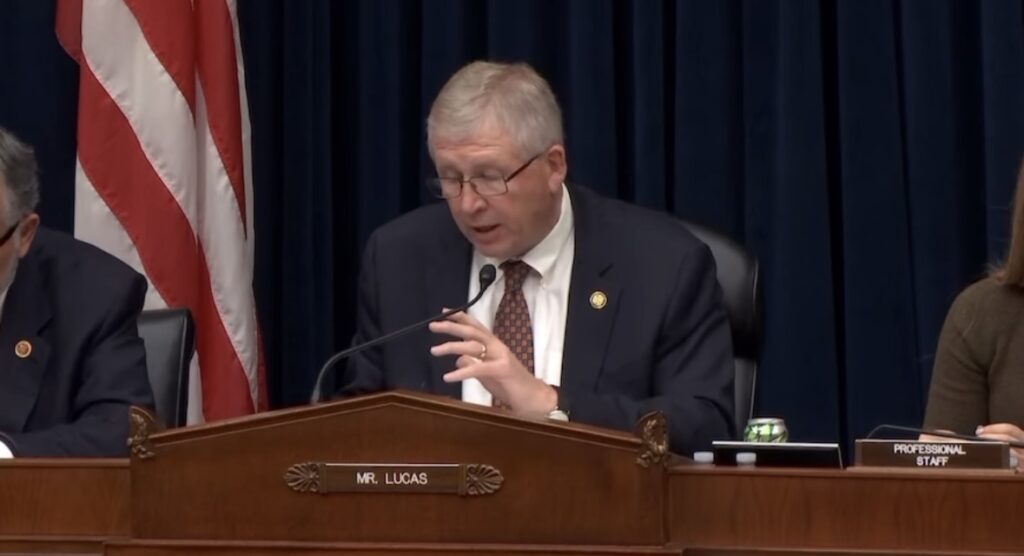
Washington, DC – Today, the Task Force on Monetary Policy, Treasury Market Resilience, and Economic Prosperity held a hearing entitled, “Striking the Right Balance Sheet”.
As Chair of the Task Force, Congressman Frank D. Lucas (OK-03) opened the hearing by highlighting the Fed’s increasing use of quantitative easing, and insisting it should rely instead on conventional monetary policy tools in order to avoid unintended consequences, such as inflation.
REMARKS AS PREPARED:
“Our focus today is on the Fed’s balance sheet – a record of its assets and liabilities that demonstrate its operations.
The Fed’s balance sheet has undergone dramatic changes in the past 15 years – growing from less than $1 trillion in 2008, or 6% of GDP, to almost $9 trillion in 2022, or 35% of GDP.
In 2008, the Fed moved from a corridor system to a floor system necessarily demanding an increase in the quantity of reserves on its balance sheet.
Despite that change, the Fed has continued to express the view that reserves should be at “the smallest levels” consistent with the effective implementation of monetary policy.
We haven’t always seen the Fed stick to that view, instead using its balance sheet to provide economic stimulus – not merely as a means to control rates.
Since 2008, the Fed has engaged in four rounds of large-scale asset purchases, or QE, with its balance sheet standing at six and a half trillion today.
Yet, the academic literature shows mixed results on the effectiveness of QE at economic support. While the jury is out on the benefits of QE, we do know that it raises risks of inflation and market distortion.
The Fed should rely on conventional monetary policy tools under its ample reserves regime and avoid market operations that may have unintended and lasting consequences.
Additionally, the Fed should clearly articulate under what conditions it uses its balance sheet for economic stimulus, economic contraction, and policy implementation in the future. This is particularly important now as the Fed engages in reserve management purchases.
Finally, it may be tempting to allow the news of the day to distract us from the purpose of today’s hearing. I will continue to emphasize that the independence of the Fed is critical in ensuring it makes sound interest rate decisions that are essential to favorable economic outcomes.
We’d do well to remember that decisions made now have lasting implications for not just the next Fed chair, but the next ten Fed chairs.
That said, let’s focus our discussion today on the proper use of the balance sheet and its impact on monetary policy implementation and Treasury market functioning.”
WITNESSES:
BACKGROUND:
The Task Force on Monetary Policy, Treasury Market Resilience, and Economic Prosperity was created at the beginning of the 119th Congress.
The Task Force is charged with examining issues related to monetary policy, the fundamental role that U.S. Treasury debt plays in the economy, and the resilience of the Treasury market. The Task Force will also examine the Federal Reserve Act and how economic growth and price stability affect the financial wellbeing of all Americans.
You can find more information on the Task Force here.
###